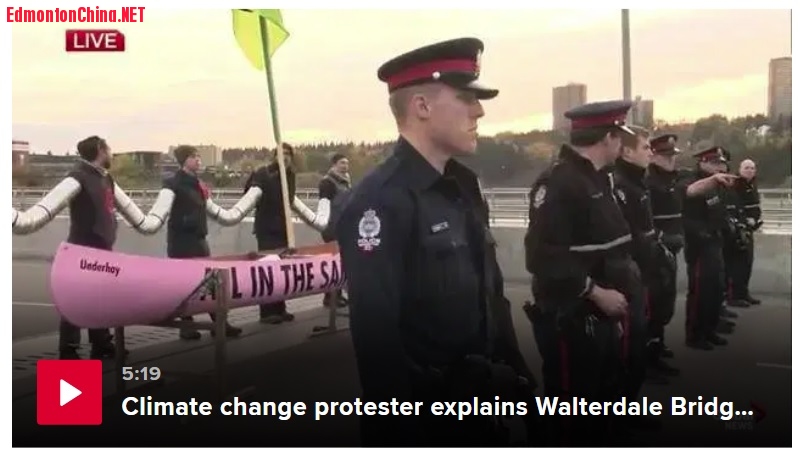
Waterdale Bridge : N$ J2 h+ Z i. b5 d' T c [
去downtown的主要通道,今天早晨被环境保护主义堵塞,汽车一直堵到 white avenue. / Y# ^% V2 I) v7 c( z + d4 }$ Q2 e$ T% A; G% z不到7点,收音机里播报,说一些环保人士要堵路。快7点的时候,说已经堵上了。7点半的时候,警察出现了。但是没有采取任何措施。# f+ p' l, ^: Q
一个edmonton journal 的读者写道: 1 o4 G+ R4 a* _+ C. Z) i 4 J, x$ T7 ^& y! \5 E4 n) kI'm curious, ten people isn't much. Yet they were allowed to disrupted thousands. What would be the police response if it was only one guy with a sign and a canoe? Is one person allowed to block traffic anywhere he wants because of any cause? Where is the limit and who decides? Is there specific laws? Can I go stop a bridge now because I don't like photo radar?
这个有意思:0 l0 d+ d* b" g& y6 ]" \
# s. l3 W+ t$ J6 K0 Z) d
The Criminal Code of Canada contains various provisions that limit individuals’ rights. The following is a list of some of the relevant Criminal Code sections that limit certain activities: : a( L! g% j0 \1 u- E7 }) Z% ^; Y0 d5 L M
Blocking or obstructing a highway (Section 423(1)(g)) w2 |/ i+ i# I+ D7 k
Causing a disturbance (Section 175)6 z2 u* q, L; V
Common nuisance (Section 180) 6 s, p9 O5 m* l, D$ E7 U+ IInterfering with transportation facilities (Section 248) 3 r' Q+ f: V, v# E* w1 C0 d S" i3 G; I8 t+ j9 u
Time to block the entrance to the EPS parking lot to protest the police not upholding the law.